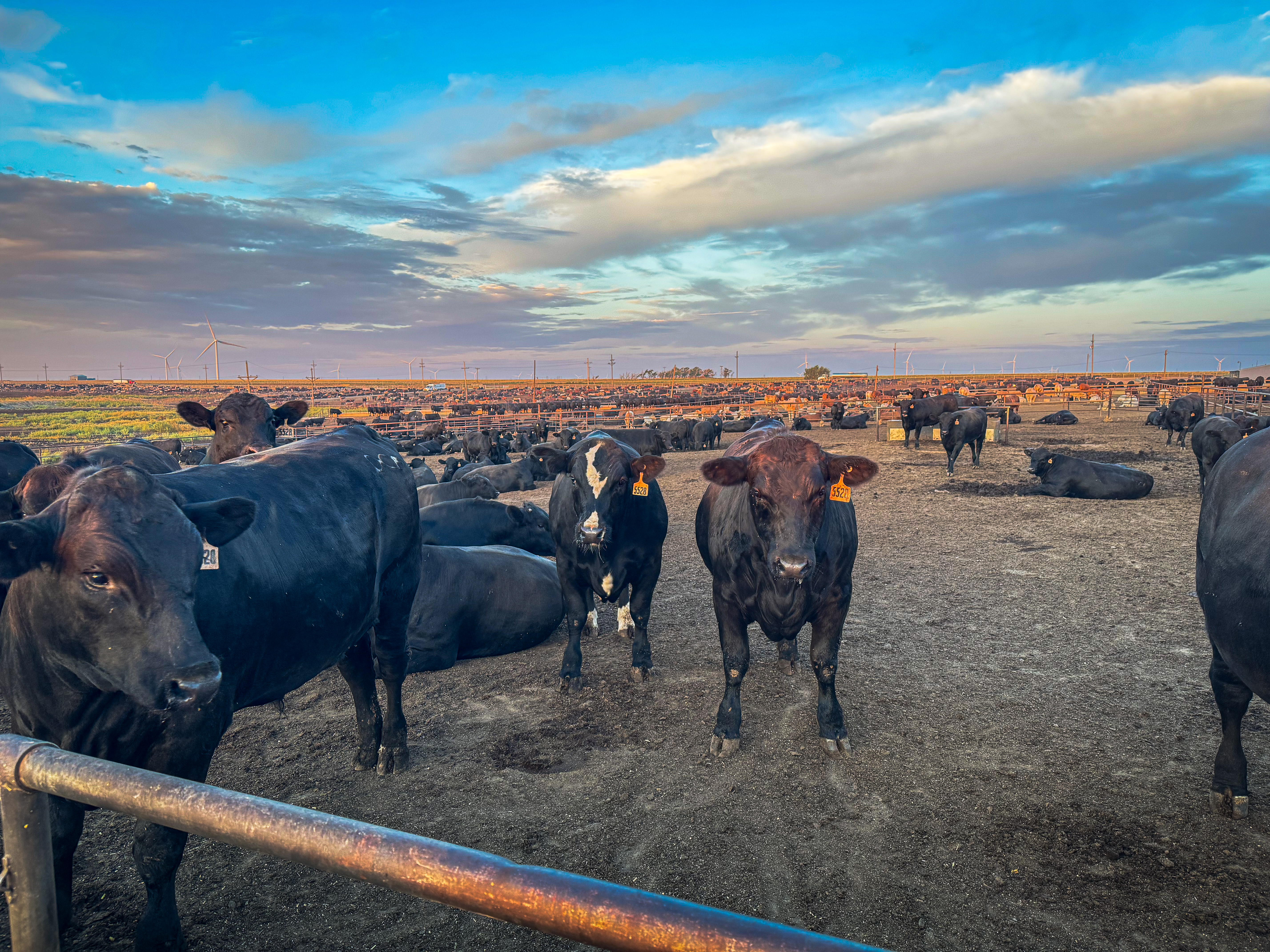
Beef has been making headlines a lot lately. Tight supplies, the smallest beef cow herd in decades, New World Screwworm, and concerns from the White House about beef prices at the grocery store. For one reason or another, “beef” has become a trending topic in the media — and rightfully so. These are important conversations about the state of the American beef industry.
But leaving the headlines aside, there is one issue at the center of many of these conversations: herd size. This contraction has been one of the most significant in decades, driven by a variety of factors that you, as a producer or industry member, probably already know — or have experienced yourself.
The cattle cycle is nothing new. Herd contraction does not happen overnight, and this certainly will not be the last time the industry goes through one. But something is different this time around. Despite a historically small beef cow herd, strong demand for beef, and the challenges that come with supplying that demand, grocery store shelves continue to be replenished with beef.
So where is all this beef coming from?
Of course, there is no single answer. Heavier carcass weights, imports, cull cow slaughter, and improvements in productivity all contribute to the amount of beef available to consumers. But there is another piece of the supply picture that has grown considerably in recent years and deserves a closer look.
Part of the answer may be standing at a dairy farm.
Dairy-origin cattle are certainly not new to the beef industry. Feedyards have been feeding Holstein steers for decades, and the dairy industry has long contributed a significant amount of beef to the U.S. supply. What has changed is not that the beef industry suddenly discovered the dairy calf.
What changed was the calf itself.
I remember my time working at a dairy farm in Wisconsin about ten years ago — my first real experience in the dairy industry — and loading day-old Holstein bull calves onto a trailer that were being sold for around $20 a head. As tempting as it was for me to buy one right on the spot, I still carry that moment in my memory. Today, seeing calves worth well over $1,000 makes me think back to that trailer.
So what changed?
The answer, in large part, is genetics.
The use of sexed dairy semen has allowed dairy farmers to become much more intentional about producing the replacement heifers they need from the animals they value most genetically. For the rest of the herd, beef semen has created another opportunity: to produce a calf that is better suited for beef production and considerably more valuable than the traditional dairy bull calf.
The numbers show how rapidly this practice has grown. In recent years, dairies have purchased the vast majority of beef semen sold in the United States. Beef-on-dairy is no longer a niche practice. It has become an important connection between two industries that have always been more intertwined than we sometimes acknowledge.
And that matters because straight dairy cattle, while valuable contributors to beef production, come with characteristics that do not always fit perfectly within a system designed primarily around conventional beef cattle. Differences in muscling, dressing percentage, days on feed, carcass characteristics, and animal health can create challenges further down the supply chain.
Beef genetics give us an opportunity to improve that fit.
But simply putting a beef sire on a dairy cow should not be the finish line. If beef-on-dairy cattle are going to remain an important part of the U.S. beef supply, then we should be asking a bigger question: how can we produce a better animal for everyone involved?
For the dairy producer, calving ease, health, and early-life value matter. For the calf ranch and feedyard, health, growth, feed efficiency, and consistency matter. For the packer, carcass traits that fit the system and produce a product consumers want matter.
That means genetics must be selected with the entire production chain in mind.
It also means we need better communication across that chain. The people making breeding decisions on the dairy need information from the people feeding and harvesting those cattle months later. If a feedyard consistently sees exceptional performance — or recurring problems — from certain types of cattle, how does that information make its way back to the dairy? And if a dairy invests in genetics and management that consistently creates a better beef animal, does the market properly reward that investment?
Those conversations matter.
Estimates suggest that dairy-origin animals have historically contributed roughly one-fifth of the U.S. beef supply. That does not mean beef-on-dairy alone accounts for all of it. Cull dairy cows and straight-bred dairy cattle remain important contributors as well. What is changing is how intentionally a growing portion of those animals are being produced for beef. That distinction is important.
Beef-on-dairy will not replace the traditional beef cow herd, nor should we expect it to. The beef cow remains essential to the industry, to rural communities, and to millions of acres of working lands that are best suited for grazing cattle. But beef-on-dairy has shown us there is another tool available when cattle supplies tighten — and perhaps an opportunity that extends well beyond the current cattle cycle.
Dairy farmers have already demonstrated that they can produce a calf intentionally designed for the beef market. Now the question is whether the beef industry can help make that calf even better. Because if beef-on-dairy is going to remain an important part of our beef supply, perhaps it is time we stop thinking about it simply as a byproduct of the dairy industry and start treating it like what it has become: an important part of the beef industry.
Author’s note: The views expressed in this article are my own and reflect my personal perspective, professional experience, and interest in the cattle industry.
© 2026 Sebastian E. Mejia Turcios. All rights reserved. Please do not reproduce this article in full without permission. Short excerpts may be shared with proper attribution and a link to this page.